Why South Sudan’s Music Industry Is Struggling to Grow
South Sudan does not simply need more successful musicians. It needs a music industry capable of producing and sustaining success.
9 min read
South Sudan has no shortage of musical talent. But behind the growing number of artists, releases and online promoters lies a music industry still struggling to establish the foundations needed for long-term success.
South Sudan's music scene has continued to evolve, with artists experimenting across Afrobeats, dancehall, hip-hop, R&B and traditional sounds. From Juba to communities across the diaspora, musicians are releasing new material, building audiences and finding creative ways to promote their work.
Social media has made South Sudanese music more accessible than ever before. Platforms such as TikTok, Facebook and YouTube allow artists to reach listeners beyond their immediate communities, creating opportunities that would have been difficult to imagine a generation ago.
Yet despite this growing activity, the country's music industry remains commercially underdeveloped.
For many artists, producing and promoting music requires significant personal investment, while opportunities to generate consistent income remain limited.
The question is no longer whether South Sudan has musical talent. It is whether the country has the structures necessary to turn that talent into a sustainable industry.
A Music Scene Without a Fully Developed Industry
There is an important distinction between having an active music scene and having a functioning music industry.
A music scene can exist wherever artists create music and audiences engage with it. A music industry, however, requires an interconnected network of businesses, professionals and institutions capable of supporting artistic careers.
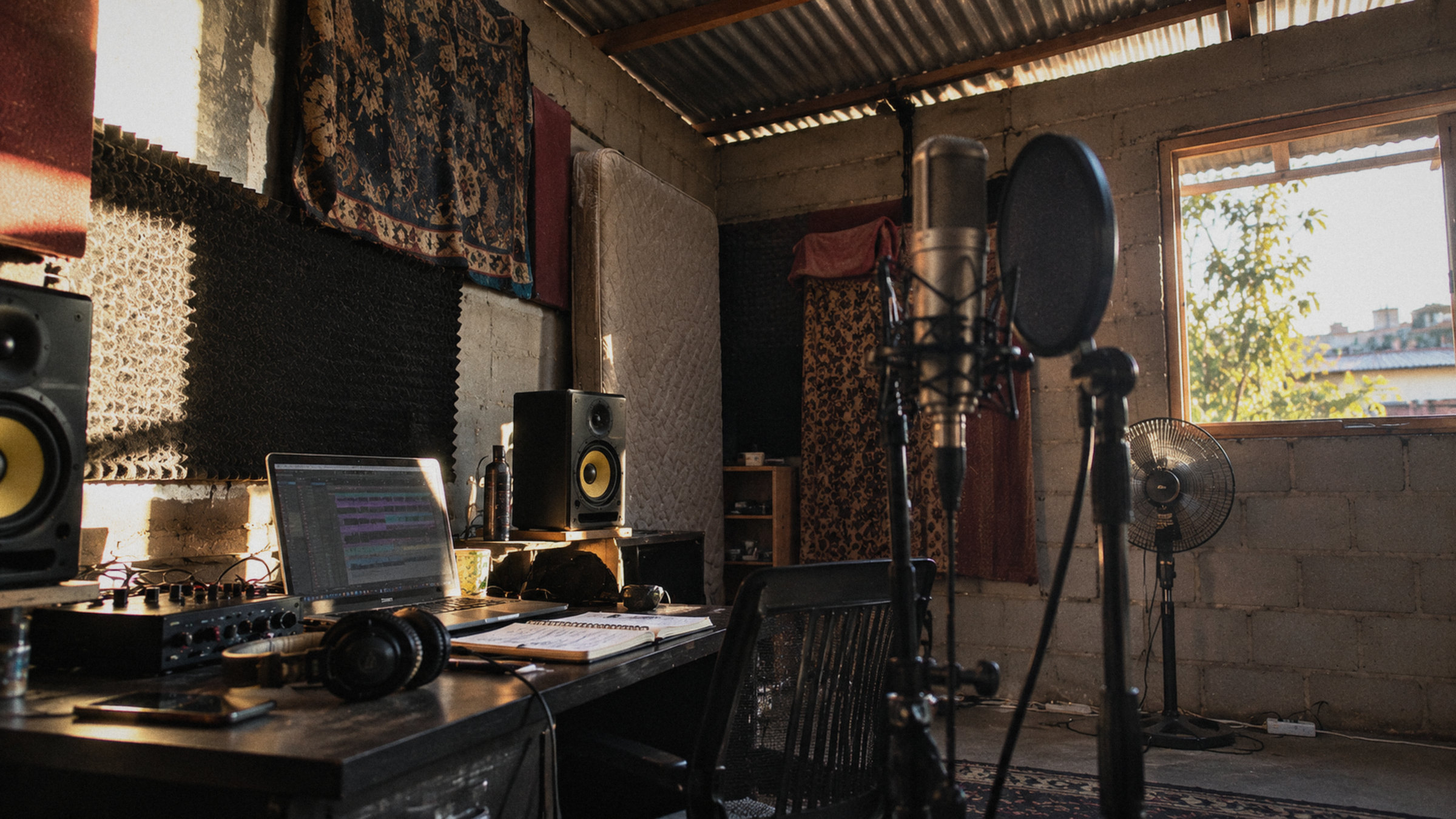
This includes recording studios, producers, distributors, artist managers, promoters, publishers, performance venues and organisations responsible for protecting intellectual property.
In South Sudan, many of these structures remain limited or operate informally.
A 2026 assessment conducted by the Ghines Foundation examined the country's music sector, identifying significant gaps in professional infrastructure, financing, distribution and institutional support.
The research highlighted a sector rich in creativity but constrained by the absence of systems needed to support its development.
For independent musicians, these limitations mean taking on responsibilities that would ordinarily be handled by several professionals.
An artist may be responsible for financing recordings, arranging music videos, organising promotional campaigns, negotiating performances and managing their own career.
While this independence demonstrates determination, it also creates significant barriers to growth.
Without a reliable support system, even talented musicians can struggle to progress beyond a certain level.
Perhaps the most significant obstacle facing South Sudanese musicians is the difficulty of turning their work into a reliable source of income.
Producing music costs money. Studio sessions, production, mixing, mastering, music videos and promotional campaigns all require financial investment.
For independent artists, these expenses are often paid out of pocket.
Recovering those costs can be difficult in a market where established revenue channels remain limited.
In more developed music industries, artists can generate income through streaming royalties, publishing, licensing, merchandise, ticket sales and commercial partnerships.
Although these opportunities are theoretically available to South Sudanese musicians, accessing them consistently remains a challenge.
Live performances continue to represent an important source of income for many artists. However, depending heavily on concerts and event bookings can create financial uncertainty.
An artist may enjoy considerable popularity without necessarily earning enough to sustain a full-time career.
This raises a fundamental question about the industry's commercial development: How can musicians build sustainable careers when the systems for generating revenue remain underdeveloped?
Popularity alone does not guarantee financial success.
For the industry to grow, artists need more opportunities to earn from their work beyond occasional performances and promotional appearances.
Copyright Protection and Music Ownership
Another longstanding challenge is the protection of intellectual property.
In November 2025, South Sudanese musicians publicly renewed calls for comprehensive copyright legislation, warning that inadequate legal protection was leaving their creative work vulnerable to piracy and unauthorised use.
Among those advocating for reform was musician Meen Mabior Meen, popularly known as Manimen.
According to reporting by Radio Tamazuj, artists expressed frustration over years of delays in establishing effective legal protections for musicians and other creative professionals.
Copyright protection is not simply about preventing people from copying songs.
It provides the legal foundation for artists, songwriters and producers to control how their work is used and potentially receive compensation when it is commercially exploited.
Without an effective copyright framework and functioning royalty collection systems, musicians face additional difficulties establishing sustainable sources of income.
However, legislation alone would not resolve the problem.
Effective enforcement, public awareness, licensing arrangements and royalty administration would also be necessary to ensure that musicians benefit from their intellectual property.
For an industry seeking commercial growth, music ownership must become more than a legal concept. It needs to translate into meaningful economic opportunities for creators.
The Missing Infrastructure Behind the Music
Successful music industries depend on more than the artists audiences see and hear.
Behind every established musician is often a network of professionals responsible for production, management, distribution, marketing and business development.
These services help artists reach wider audiences while allowing them to focus on their creative work.
South Sudan's developing music sector has yet to establish many of these services at scale.
The Ghines Foundation's 2026 research identified limited access to professional recording facilities, training opportunities and financial support among the challenges facing the industry.
These gaps affect more than recording quality.
Without experienced managers and booking agents, artists may struggle to negotiate favourable commercial agreements. Without publishers and distributors, opportunities to monetise music can remain underutilised.
Similarly, limited access to professional training makes it harder for aspiring producers, sound engineers and music business professionals to develop their skills.
Building a sustainable industry therefore requires investment not only in musicians but also in the people and businesses supporting them.
A thriving music economy creates opportunities for sound engineers, photographers, videographers, event organisers, designers, journalists and many others.
The development of these supporting professions is essential if music is to become a meaningful source of employment and economic activity.
A Domestic Market With Limited Digital Access
Digital platforms have transformed how music is distributed and consumed around the world.
Today, an independent artist can release a song internationally without needing a traditional record label.
However, access to digital distribution does not automatically create a commercially viable audience.
South Sudan continues to face significant challenges in internet connectivity.
According to DataReportal's Digital 2026 report, approximately 1.61 million people were using the internet in South Sudan in October 2025, representing around 13.2% of the population.
These estimates suggest that the majority of the country's population remained offline.
For musicians, this presents a significant challenge.
Although digital platforms make music available globally, limited domestic internet access restricts the number of people who can regularly discover and consume music online.
Economic conditions can further complicate the situation.
Even where listeners have internet access, spending on music subscriptions, concert tickets and other entertainment products competes with essential household expenses.
This does not mean South Sudanese audiences are unwilling to support their artists.
Rather, the domestic market operates within economic and technological conditions that can make commercial growth difficult.
As internet access expands, digital music consumption may create new opportunities. However, connectivity alone will not guarantee that artists can earn sustainable incomes.
Social Media Popularity Is Not the Same as Commercial Success
Social media has become one of the most visible parts of South Sudan's music ecosystem.
Artists increasingly rely on TikTok, Facebook and other platforms to promote releases, while independent promoters and entertainment pages help introduce songs to new audiences.
This activity plays an important role in music discovery.
For emerging artists without access to established media organisations, social media can provide an affordable way to build recognition.
However, visibility and commercial success are not necessarily the same thing.
A song might receive thousands of views across promotional pages without generating meaningful revenue for the artist.
Likewise, a musician may develop a substantial online following while continuing to finance their career independently.
The challenge is converting attention into long-term opportunities.
Can online popularity help artists secure paid performances, develop loyal audiences, attract commercial partnerships or generate consistent revenue from their music?
These questions deserve greater attention as digital promotion becomes increasingly central to the South Sudanese music scene.
Social media promotion is valuable, but it cannot replace the wider commercial structures required to sustain an industry.
Ultimately, an artist's success should not be measured by visibility alone, but also by their ability to build a lasting career.
The Role of the South Sudanese Diaspora
South Sudanese music extends far beyond the country's borders.
Communities in neighbouring African countries, Australia, North America and Europe contribute to the development and consumption of South Sudanese music.
For artists living abroad, access to different recording facilities, professional networks and entertainment markets can create opportunities that may be less accessible within South Sudan.
Diaspora communities also provide audiences for performances, cultural events and music releases.
This international presence represents an important opportunity for the wider South Sudanese music ecosystem.
However, the growth of South Sudanese music internationally does not automatically translate into development within the domestic industry.
An artist building a successful career overseas may operate within an entirely different commercial environment from a musician based in Juba.
The challenge is finding ways to connect these markets.
Collaborations, professional partnerships, investment, knowledge sharing and organised cultural events could help strengthen relationships between artists operating inside South Sudan and those based abroad.
Rather than viewing the domestic and diaspora music scenes as separate industries, greater cooperation could create opportunities for both.
The Need for Investment and Long-Term Planning
South Sudan's music industry cannot develop through artistic talent alone.
Sustainable growth requires coordinated investment in infrastructure, professional development, intellectual property protection and commercial opportunities.
This does not necessarily mean relying entirely on government intervention.
Private businesses, event organisers, investors, media organisations and artists themselves all have potential roles to play.
Recording studios can develop professional production services. Event organisers can create more consistent performance opportunities. Artist managers can help musicians establish sustainable careers.
Media organisations can contribute by documenting the industry, introducing emerging talent and creating opportunities for meaningful discussion.
Educational initiatives could also help develop the next generation of producers, engineers, managers and entertainment professionals.
Importantly, industry development requires reliable information.
Without comprehensive data on music revenue, employment, audience behaviour and commercial activity, it becomes difficult to measure progress or identify opportunities for investment.
The Ghines Foundation's 2026 assessment represents an important step towards understanding these challenges.
However, continued research and industry participation will be necessary to turn those findings into meaningful progress.
Building an Industry That Can Support Its Talent
South Sudan's music industry faces substantial challenges, but those challenges should not overshadow the creativity and determination of its artists.
Across the country and throughout the diaspora, musicians continue to produce new material, experiment with different sounds and introduce South Sudanese music to wider audiences.
Their efforts demonstrate that the foundations of a vibrant music culture already exist.
What remains underdeveloped is the commercial environment needed to support that creativity.
For South Sudanese music to grow sustainably, the conversation must extend beyond which artist is trending, which song has the most views or who has secured an international collaboration.
Greater attention needs to be given to ownership, revenue, professional development, infrastructure and long-term investment.
The success of an industry should not depend solely on a handful of popular musicians. It should also be reflected in the opportunities available to emerging artists and the professionals working behind the scenes.
South Sudan does not simply need more successful musicians. It needs a music industry capable of producing and sustaining success.
And building that industry will require collective effort from artists, businesses, institutions and audiences alike.